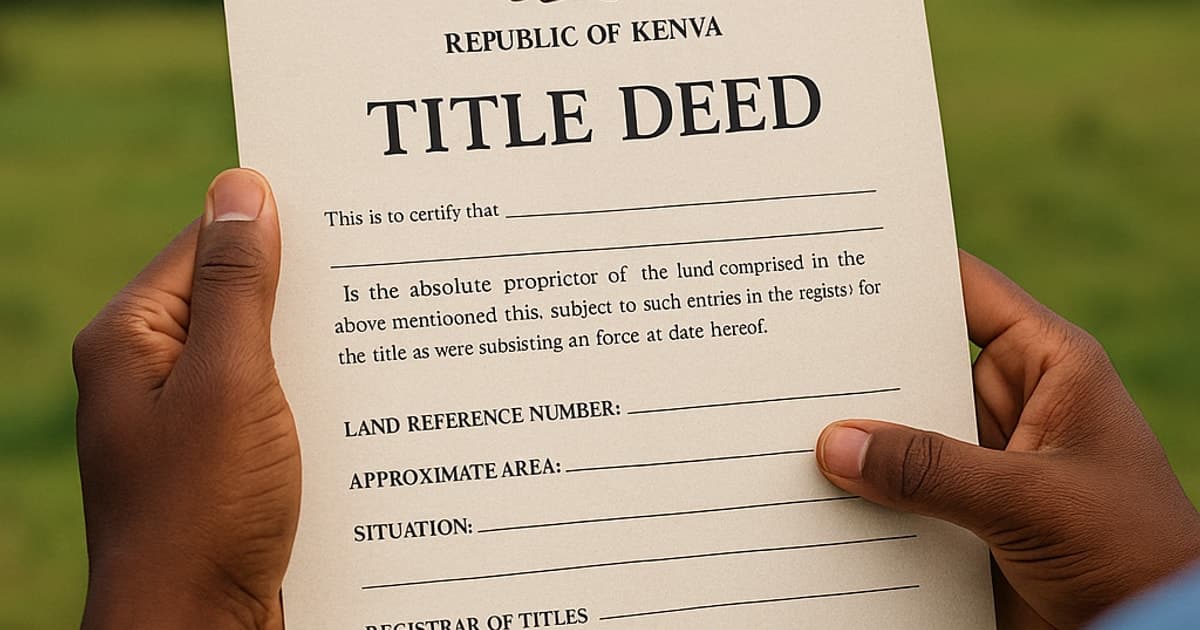
Understanding Title Deeds and Land Ownership in Kenya
A clear guide to title deeds in Kenya: learn the types, how to verify them, and how they affect land ownership, transfers, and investments.

When it comes to land transactions in Kenya, few documents carry as much weight as the title deed. Whether you’re a first-time buyer, a seasoned investor, or inheriting property, understanding how title deeds work is crucial. This guide breaks down everything you need to know.
1. What is a Title Deed?
A title deed is a legal document proving ownership of land or property. It contains the owner’s name, land size, registration number, and history of transactions. In Kenya, the Ministry of Lands and Physical Planning issues title deeds through county land offices or the National Land Commission.
2. Types of Title Deeds in Kenya
Freehold Title: Offers absolute ownership in perpetuity. Most common in rural and ancestral land.
Leasehold Title: Grants ownership for a fixed term (typically 99 years). Common in urban areas and with government land.
Sectional Title: Used for apartment units under the Sectional Properties Act, indicating ownership of a portion of a building and shared areas.
3. Why Title Deeds Matter
🛡️ Proof of ownership
💼 Requirement for legal transactions (sales, inheritance, loans)
🏗️ Used in planning permissions and development approvals
🧾 Helps resolve boundary or ownership disputes
4. How to Verify a Title Deed
Always verify before purchasing land:
✅ Visit the Ministry of Lands or use the Ardhisasa platform
✅ Conduct a land search using the land’s LR number
✅ Confirm the details match the seller's national ID
✅ Hire a registered land surveyor or advocate to assist
You can also check our previous article on Hiring a Land Surveyor in Kenya for professional assistance.
5. Common Red Flags
Multiple individuals claiming ownership
Title registered under a deceased person’s name
Title issued but land is government or trust land
Overlapping titles or fraudulent duplications
6. Transfer and Registration Process
To transfer ownership:
Draft and sign a Sale Agreement
Conduct due diligence (including a land search)
Obtain Land Control Board consent
Pay stamp duty (usually 4% in urban areas, 2% in rural)
Register the new owner at the Lands Registry
Receive updated title deed
Final Thoughts
A title deed is more than a piece of paper — it's your legal shield in Kenya’s dynamic property market. Whether you're building, buying, or investing, always make sure your land documents are clean, verified, and properly transferred.